How to Choose Fire Resistant Wall Panels for Global Projects?

Time:2026-10-17 Author:Liam
0%

Choosing fire-resistant wall panels for global projects requires more than reading a product brochure. The real question is, “are wall panels fire resistant” under the exact conditions of use? Panel cores, facings, joints, fixings, insulation, and service penetrations all affect performance. A panel that passes one test may behave differently after transport, cutting, moisture exposure, or incorrect installation. That detail is easy to underestimate.

Dr. Jim A. Milke, a respected fire-protection engineering authority, offers a practical principle: “Fire protection is a systems problem, not simply a materials problem.” This principle should guide every international specification. Check the complete tested assembly, not only the core material. Review fire-resistance ratings, reaction-to-fire classifications, smoke development, structural stability, and flame spread data. Relevant evidence may include ASTM E119, ASTM E84, EN 13501-1, EN 1364, AS 1530.1, or ISO 834 results, depending on the project location.

Look closely.

A reliable selection process also examines factory quality controls, test-report scope, installation manuals, and independent certification. A Class A surface rating does not automatically mean a wall achieves a two-hour fire-resistance rating. That distinction matters in hospitals, airports, warehouses, and high-rise buildings. Local authorities may also require approved details for doors, corners, penetrations, and panel connections.

Specifications are never perfect. Site conditions can expose weak assumptions. Therefore, architects, engineers, contractors, and fire authorities should review the assembly together. The strongest choice is not always the thickest panel. It is the panel system supported by relevant evidence, correct installation, and traceable performance.
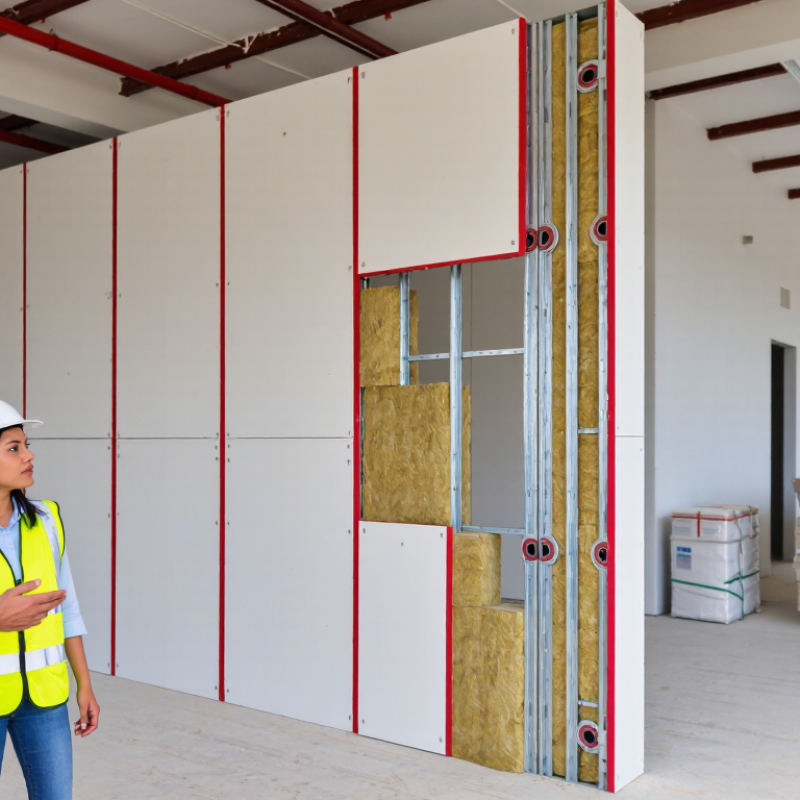
How to Choose Fire Resistant Wall Panels for Global Projects?

Define Fire Resistance Requirements for Global Building Projects

Defining fire resistance requirements is the critical first step when selecting wall panels for global building projects. Requirements vary by building use, height, occupancy, and evacuation strategy. A hospital corridor may require a different wall assembly than a warehouse partition. Confirm the required resistance period, such as 30, 60, or 120 minutes, with the project’s local code consultant.

Do not assess the panel alone. Fire performance depends on the complete tested assembly, including framing, insulation, fasteners, joints, doors, and service penetrations. Ask for test reports that match the intended construction, not only a similar product description.

Check whether the wall is load-bearing, non-load-bearing, internal, or exposed to weather. These details can change the required test method. Small gaps matter.

Approval & Documentation Global projects also need a clear approval process. Compare local regulations, contract specifications, and recognized fire testing standards before procurement. A certificate from one market may not satisfy authorities in another. Confirm document language, laboratory accreditation, test scope, and certificate validity. Keep installation records with photographs of sealed joints and penetrations. This creates useful evidence during inspections.

Site conditions deserve equal attention. Humidity, temperature changes, transport damage, and inconsistent workmanship can reduce performance. A strong design may still fail when panels are cut carelessly around cables.

I have seen specifications overlook maintenance access and future alterations. That weakness deserves review.

Define who approves substitutions, how damaged panels are repaired, and how installers receive practical training. Fire safety is designed on paper, but verified in the wall.

Compare Wall Panel Materials, Ratings, and Testing Standards

Choosing fire-resistant wall panels for global projects starts with material comparison, not appearance. Mineral wool panels offer strong insulation and low flame spread. Calcium silicate panels resist heat well and remain dimensionally stable. Metal-faced composite panels can be lightweight, but their core needs careful review. Some cores perform poorly when exposed to sustained heat.

Look beyond a single fire label. Reaction-to-fire ratings describe how a product contributes to flame development and smoke. Under EN 13501-1, A1 and A2 classifications indicate very limited contribution to fire. ASTM E84 Class A evaluates flame spread and smoke development. These ratings do not prove wall endurance. For fire resistance, review tested assemblies under EN 13501-2, ASTM E119, or equivalent local methods. EI 60, for example, targets insulation and integrity for 60 minutes.

Testing must match the actual installation. Joint design, fasteners, insulation thickness, and penetrations can change performance. A panel tested alone may not represent a complete wall. On site, small gaps around service openings are common failure points. They deserve inspection. Project teams should request full test reports, field-of-application limits, and independent certification records. Standards differ between regions, and translated documents can create confusion. I would not approve a panel from its brochure alone. Even a strong rating becomes uncertain when the substrate, fixing method, or installation quality changes.

How to Choose Fire Resistant Wall Panels for Global Projects? - Compare Wall Panel Materials, Ratings, and Testing Standards

Note: Fire-resistance ratings apply to the complete tested wall assembly—including panels, joints, framing, fixings, insulation, and penetrations—not to a panel material in isolation.
Panel material / system Typical construction Combustibility and reaction-to-fire considerations Common fire-resistance rating range for tested assemblies Relevant testing and classification standards Strengths Key limitations and selection checks
Gypsum board wall systems Paper-faced or glass-mat gypsum boards fixed to steel or timber studs, often with mineral wool in the cavity. Gypsum contains chemically bound water and can provide effective fire protection. The paper facing is combustible, so the complete product and assembly must be assessed. Commonly 30–120 minutes, depending on board layers, board thickness, framing, insulation, joints, and load conditions. ASTM E119; UL 263; EN 1364-1; EN 13501-2; ISO 834; local building-code fire-resistance methods. Widely available; relatively lightweight; easy to cut and install; extensive tested wall-system data. Moisture and impact resistance vary. Board type, screw spacing, joint treatment, service penetrations, and cavity insulation must match the tested design.
Mineral wool sandwich panels Factory-made panels with mineral wool insulation between steel or other tested facings; joints are typically interlocking or mechanically sealed. Mineral wool is generally non-combustible, but facings, coatings, adhesives, sealants, and joint details can affect the classification of the finished panel. Often 30–240 minutes in tested separating or compartment-wall configurations; actual performance depends strongly on panel thickness and joint design. EN 1364-1; EN 13501-1 and EN 13501-2; ASTM E119; UL 263; ISO 834; EN 14509 where applicable to factory-made sandwich panels. High fire resistance potential; good thermal and acoustic performance; rapid installation; suitable for industrial and modular construction. Panel joints, penetrations, openings, support conditions, and edge details are critical. The core may be non-combustible while the full panel has a different classification.
Calcium silicate boards Rigid mineral boards installed as single or multiple layers over steel framing, concrete, or other supporting substrates. Usually mineral-based and non-combustible, subject to the exact formulation, surface coating, and product certification. Commonly 60–240 minutes in tested wall, shaft, ceiling, and fire-protection systems. EN 13501-1; EN 1364-1; EN 1363-1; ASTM E119; UL 263; ISO 834, depending on the project jurisdiction. Good dimensional stability at elevated temperatures; suitable for shafts, plant rooms, service enclosures, and high-temperature environments. May be heavier and more difficult to machine than gypsum. Verify board density, thickness, fixing method, joint treatment, and moisture behavior.
Fiber-cement panels Cementitious boards reinforced with cellulose or synthetic fibers, installed on metal or timber framing or as rainscreen cladding. Many fiber-cement products have low combustibility or non-combustible characteristics, but coatings, membranes, backing layers, and subframes must also be assessed. Typically 30–120 minutes for tested wall assemblies; higher ratings require specific multi-layer or backed systems. EN 13501-1; EN 1364-1; ASTM E119; UL 263; ASTM E84 for surface burning where applicable; NFPA 285 for certain exterior wall assemblies. Durable exterior surface; good resistance to weather and impact; suitable for façades and ventilated rainscreen applications when correctly detailed. The cladding panel alone does not demonstrate façade compliance. Check cavity barriers, insulation, membranes, subframe, fire stopping, and façade-system testing.
Magnesium oxide boards Magnesium-based boards used as sheathing, interior lining, or part of a framed wall assembly. Some formulations are non-combustible or have low flame-spread characteristics, but performance varies considerably with composition, reinforcement, additives, and surface treatment. Approximately 30–120 minutes in product-specific tested assemblies; do not infer a rating from the material name alone. EN 13501-1; EN 1364-1; ASTM E119; UL 263; ASTM E84, where applicable; use jurisdiction-specific certification. Potentially good fire and moisture performance; can be used where a rigid sheathing board is required. Quality and formulation differences are significant. Check dimensional stability, chloride-related corrosion risk, moisture compatibility, edge performance, and current independent test reports.
PIR or PUR insulated sandwich panels Rigid polyisocyanurate or polyurethane foam core between metal facings, with profiled or interlocking joints. The polymer core is combustible. Some systems achieve limited flame-spread or fire-resistance performance through formulation, facings, thickness, and joint design, but they are not inherently non-combustible. Commonly 30–120 minutes for specific tested systems; performance can differ substantially between core formulations and panel joints. EN 13501-1; EN 1364-1; EN 14509; ASTM E119; UL 263; ASTM E84; NFPA 285 for applicable exterior wall assemblies. Excellent thermal insulation-to-weight ratio; lightweight; fast installation; useful where energy performance and construction speed are priorities. Do not substitute a different core, thickness, facing, or joint profile without approval. Carefully assess smoke, flame spread, fire growth, delamination, and end-of-panel details.
Phenolic foam sandwich panels Phenolic foam core enclosed by metal facings, generally manufactured as insulated wall or ceiling panels. Combustible polymer foam. Some products provide low flame spread and reduced smoke compared with certain other foams, but classification is product-specific. Often 30–120 minutes in tested assemblies, subject to the exact panel construction, joint, support, and fire exposure conditions. EN 13501-1; EN 1364-1; EN 14509; ASTM E119; UL 263; ASTM E84; NFPA 285 where required for exterior walls. High thermal resistance at relatively low thickness; lightweight; suitable for controlled-environment buildings when properly tested. Combustibility, smoke, joint integrity, and fire spread must be evaluated using full-system evidence. Confirm compatibility with adhesives, sealants, and hygienic finishes.
Aluminum-faced composite panels Thin aluminum skins bonded to a polymer, mineral-filled, or other core; commonly used for external cladding and façades. Fire performance depends primarily on the core. Polymer-core panels may be combustible; mineral-filled cores may achieve improved reaction-to-fire classifications but still require system testing. The panel itself is generally not a fire-resistance-rated wall. The complete façade or wall assembly must be tested for the required performance. EN 13501-1; EN 1364-1; ASTM E84; NFPA 285; BS 8414 or other national façade-system tests where required by the project code. Lightweight; visually adaptable; suitable for ventilated façade systems when the core and supporting construction meet the applicable requirements. Never select by metal skin alone. Verify core composition, cavity barriers, insulation, membranes, subframe, fire stopping, and full-scale façade test evidence.
Global project selection checklist: Confirm the required fire-resistance period, load-bearing or non-load-bearing status, integrity and insulation criteria, reaction-to-fire classification, smoke requirements, façade or interior application, local code acceptance, third-party test evidence, field-joint details, penetrations, and compatibility with the specified framing and insulation.

Assess Climate, Installation Conditions, and Regional Compliance

Choosing fire-resistant wall panels for a global project starts with the local climate, not a product brochure. High humidity can swell cores, weaken joints, and corrode fasteners. Coastal air requires protected fixings and sealed panel edges. Cold regions create freeze-thaw movement, while hot interiors can stress adhesives and coatings.

Tips: Build a climate profile for each site. Request tested fire, smoke, moisture, and impact data. Check the complete wall assembly, including insulation, joints, sealants, and supports. Confirm storage conditions before installation. Wet or damaged panels should not be fitted. Record substrate temperatures during bonding. Small records help when conditions change.

Review temperature ranges, moisture exposure, UV levels, and cleaning methods with a qualified building professional. A panel suited to a dry warehouse may fail at a humid port facility.

Installation conditions can alter certified performance. Uneven substrates, open joints, rushed curing, or incorrect fasteners may create weak paths for heat and smoke. Regional compliance also varies. Check fire classifications, test methods, documentation language, and approval routes in each jurisdiction.

Ask an independent fire engineer or code consultant to review the specification before purchase. Do not rely on a certificate alone. Its scope may exclude the exact thickness, joint detail, or support spacing.

Site reviews often reveal another issue: teams focus on panel ratings but overlook penetrations. That mistake is common, and costly.

Evaluate Panel Performance, Safety Features, and Lifecycle Costs

How to Choose Fire Resistant Wall Panels for Global Projects?

Panel performance must be verified, not assumed. Check reaction-to-fire and fire-resistance ratings separately. EN 13501-1 classifies surface reaction, while EN 1364-1 tests non-loadbearing wall assemblies. ASTM E119 and ISO 834 offer comparable fire-resistance testing routes, but results are not automatically interchangeable. Review the complete assembly, including joints, fasteners, insulation, and service penetrations. A strong core can fail when installation gaps remain open. NFPA’s Fire Loss in the United States During 2023 reported 1,388,500 fires and about 23.3 billion dollars in property damage. That figure is regional, yet it shows why documented performance matters on every project. Field inspections often reveal missing seals and damaged edges. Small defects matter.

Tips: Request third-party test reports, factory quality records, and installation details before approval. Match the panel rating to the local code and project risk. Check smoke development, water resistance, impact strength, and corrosion behavior. These features support safer operation, not just certification. Also compare lifecycle costs. UNEP’s Global Status Report for Buildings and Construction 2024 states that buildings consume about 32% of global energy and produce roughly 34% of global carbon dioxide emissions. Durable panels can reduce replacement waste, downtime, and maintenance visits. However, durability claims need evidence. Ask for service-life assumptions, repair methods, and disposal information. A cheaper panel may become expensive after one leak, impact, or unplanned shutdown. I have seen specifications focus heavily on the initial price. That approach is incomplete.

Select Suppliers and Verify Documentation for International Projects

How to Choose Fire Resistant Wall Panels for Global Projects?

For global projects, fire resistant wall panels must be selected through documented evidence, not attractive samples. Supplier capability matters as much as panel performance. Ask where the panels are manufactured, how batches are controlled, and who signs the quality records. Request recent fire test reports from an appropriately accredited laboratory. Check the exact panel thickness, core, facing, joint design, and fixing method. A report for one assembly cannot automatically validate another. That mistake is common. During technical reviews, compare the report’s test standard with the destination country’s project requirements. Also confirm whether the classification covers walls, ceilings, or both. A supplier should provide traceable production codes and clear installation instructions.

Do not accept a certificate alone. Read its scope, issue date, laboratory details, and limitations. Ask for declarations of performance, reaction-to-fire data, durability information, and independent inspection records when available. For international shipments, verify packing protection, moisture controls, and replacement procedures for damaged panels. I once treated a polished document set as proof of reliability. It was not enough. The drawings used a different joint sealant than the tested assembly. That gap could have delayed approval and weakened the intended barrier. A careful supplier will answer difficult questions without changing the subject. Still, no review is perfect. Record assumptions, request written clarifications, and have a qualified local professional confirm final compliance before installation.

FAQS

How should climate affect fire-resistant wall panel selection?

Build a climate profile for every site. High humidity can swell cores and weaken joints. Coastal air needs sealed edges and protected fixings. Cold regions experience freeze-thaw movement. Hot interiors may stress adhesives and coatings. A dry warehouse is not a humid port.

What site conditions should be checked before installation?

Review temperature, moisture, ultraviolet exposure, and cleaning methods. Check the substrate for uneven areas or contamination. Store panels in dry, protected conditions. Do not install wet or damaged panels. Record substrate temperatures during bonding. Small records matter.

Why can installation change certified fire performance?

Certification depends on the tested wall assembly. Open joints can create paths for heat and smoke. Incorrect fasteners may weaken connections. Rushed curing can reduce adhesive strength. Inspect insulation, sealants, supports, and service penetrations. Small defects matter.

Are fire reaction and fire resistance the same?

No. They measure different performance characteristics. Reaction-to-fire concerns surface behavior and flame development. Fire resistance concerns the wall’s performance over time. Test results are not automatically interchangeable. Match evidence with local project requirements. Ask a qualified fire professional.

What details should a fire test report contain?

Check the exact panel thickness, core, facing, and joint design. Confirm the fixing method and support spacing. Review penetrations and insulation details. Read the report’s scope, date, laboratory information, and limitations. A certificate alone is insufficient. The details matter.

How can a supplier’s reliability be assessed?

Request traceable production codes and batch quality records. Ask for recent independent test reports. Confirm installation instructions and replacement procedures. Check moisture protection during international shipping. A polished document set may still contain gaps. Review everything.

How should lifecycle costs influence the decision?

Compare purchase price with maintenance, replacement, downtime, and disposal costs. Durable panels may reduce waste and repair visits. Ask how service life was calculated. Request documented repair methods and durability assumptions. A cheaper panel can become costly after one leak. Price is only one part.

What should happen before final approval?

Compare the tested assembly with the actual design. Inspect panel edges, joints, fasteners, and penetrations. Record assumptions and request written clarifications. Have a qualified local professional confirm compliance. I once trusted attractive documents too quickly. That was incomplete.

Conclusion

Choosing fire-resistant wall panels for global building projects requires a structured evaluation of safety, performance, and long-term value. Start by defining the required fire-resistance period, building use, occupancy risk, and local code requirements. When asking, “are wall panels fire resistant,” confirm the actual tested rating rather than relying on general product descriptions. Compare core materials, surface layers, smoke performance, moisture resistance, and test methods recognized in the target market.

Project conditions also matter. Consider climate, humidity, temperature changes, transportation, storage, and installation methods, as these can affect panel performance. Review safety features such as fire spread control, structural stability, and compatibility with insulation and joints. Lifecycle costs should include installation, maintenance, replacement, and energy performance. Finally, select suppliers able to provide traceable test reports, technical specifications, installation guidance, quality records, and region-specific compliance documents. Careful verification helps ensure the chosen panels remain safe, practical, and reliable throughout the project’s service life.

Liam

Liam

Liam is a dedicated marketing professional with a profound expertise in the industry, where he excels at highlighting the unique advantages of our core products. With a keen understanding of market trends and consumer needs, Liam frequently updates our company’s professional blog, providing......