How Do Wall Panels Improve Insulation?

Time:2026-10-07 Author:Mason
0%

Wall panels can change how a room feels, not just how it looks. On a cold morning, a properly installed insulated panel may reduce heat loss through an exterior wall. The surface can feel less icy near windows, corners, and exposed masonry. This practical difference explains why many homeowners and contractors ask, “do wall panels improve insulation?”

The answer depends on the panel type, wall condition, and installation quality. Rigid foam, insulated sandwich panels, and some composite systems add thermal resistance. They can also limit drafts when joints are sealed carefully. However, a decorative panel without an insulation core offers little thermal improvement. It may hide an uncomfortable wall without solving the real problem.

Building-science guidance treats the entire wall assembly as one system. Insulation value, thermal bridging, vapor control, ventilation, and moisture protection all matter. A high-rated panel cannot compensate for gaps around outlets or poorly sealed edges. Small mistakes matter. I have seen retrofit plans promise impressive savings, yet overlooked damp masonry or an uninsulated ceiling. That is a useful warning.

Reliable decisions begin with verified product data, local climate requirements, and an inspection of the existing wall. Look for tested R-values, fire classifications, moisture guidance, and installation instructions. A qualified professional can identify condensation risks before panels cover the surface. Energy savings also vary with heating habits, window performance, and air leakage. Wall panels may improve insulation, but they are not a universal cure. Their real value appears when design, materials, and workmanship support each other.

How Do Wall Panels Improve Insulation?

What Wall Panel Insulation Means

Wall panel insulation means more than placing a thick board inside a wall. It is a designed layer that slows heat flow, limits air leakage, and reduces thermal bridging around studs. Rigid foam, mineral wool, and structural insulated panels can each serve different building needs. The right choice depends on climate, moisture exposure, fire requirements, and wall assembly.

The International Energy Agency reported that buildings used about 30% of global final energy in 2022. Better envelopes can reduce the heating and cooling load behind that figure. The U.S. Department of Energy commonly recommends wall insulation around R-13 to R-21, depending on climate zone and construction type. Higher R-value helps, but workmanship still matters. A narrow gap beside a panel can become a cold strip across the room.

Small details matter.

During installation, panels should fit tightly around corners, outlets, windows, and service penetrations. Air-sealing tapes and compatible membranes can prevent drafts, while moisture control protects insulation performance over time. I have found that specifications often look excellent on paper, yet imperfect joints weaken real results. This is where site inspection becomes essential. Thermal imaging can reveal cold lines that are invisible after drywall installation. Insulation also does not solve every comfort problem; poorly shaded windows, weak ventilation, or damp materials may remain. That limitation deserves honest attention before selecting a wall system.

How Wall Panels Reduce Heat Transfer

How Do Wall Panels Improve Insulation?

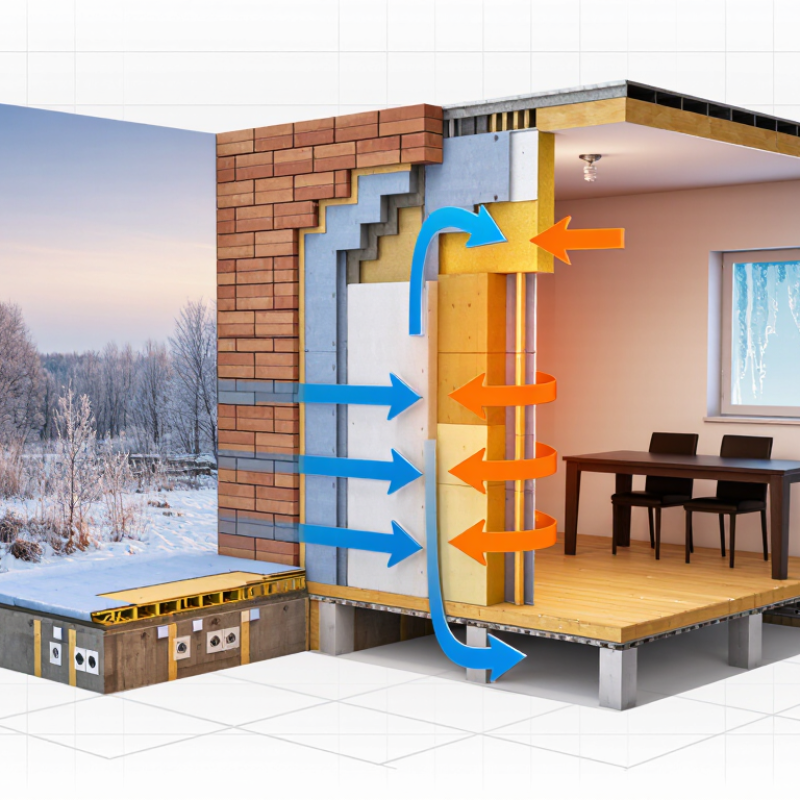
Wall panels reduce heat transfer by creating a controlled barrier between indoor rooms and outdoor temperatures. In winter, they slow heat escaping through walls. In summer, they limit heat entering from sun-warmed surfaces. Most panels contain low-conductivity materials that resist conduction, while sealed joints reduce air movement and unwanted convection.

The result depends on the whole wall system, not the panel alone. A panel with strong thermal resistance can perform poorly when gaps surround outlets, corners, or fasteners. These small openings act like thermal bridges. I once assumed thicker panels always worked better, but installation quality often mattered more. Moisture also deserves attention because damp insulation transfers heat more easily and may damage surrounding materials. Check the stated R-value, wall condition, and local building requirements before installation.

Tips: Fit panels tightly, seal visible joints, and avoid compressing insulation. Inspect corners with a light or smoke pencil to find air leakage. Keep panels dry during storage and installation. Measure twice. Small gaps matter. A professional assessment is useful when walls feel cold in isolated strips, especially near windows or floor edges. Some improvements may seem minor, yet reducing drafts can noticeably improve comfort and lower heating or cooling demand.

How Do Wall Panels Improve Insulation? — How Wall Panels Reduce Heat Transfer

Typical thermal performance of common wall-panel insulation cores at approximately 4 in (102 mm) thickness

Wall Panel or Insulation Core Primary Heat-Transfer Control Typical Thermal Resistance per Inch Approximate R-Value at 4 in Approximate U-Value of Insulation Layer How It Reduces Heat Transfer Important Design Consideration
Polyisocyanurate (PIR) Panel Conduction and air movement R-5.6–R-7.2
per inch
R-22.4–R-28.8 0.035–0.045
Btu/h·ft²·°F
Its low-conductivity foam core creates a continuous thermal barrier, reducing the rate at which heat moves through the panel. Thermal performance can decrease at low temperatures and where joints, fasteners, or framing create thermal bridges.
Polyurethane (PUR) Panel Conduction and air movement R-5.6–R-7.0
per inch
R-22.4–R-28.0 0.036–0.045
Btu/h·ft²·°F
The closed-cell foam contains low-conductivity gas cells that slow heat flow through the panel core. Seams must be properly designed and sealed; the stated R-value does not represent the complete installed wall assembly.
Extruded Polystyrene (XPS) Panel Conduction and moisture resistance R-4.5–R-5.0
per inch
R-18.0–R-20.0 0.050–0.056
Btu/h·ft²·°F
The continuous rigid foam layer interrupts conductive heat paths through masonry, concrete, or framed walls. Joints and penetrations require careful detailing; long-term thermal performance may differ from initial laboratory values.
Expanded Polystyrene (EPS) Panel Conduction R-3.6–R-4.2
per inch
R-14.4–R-16.8 0.060–0.069
Btu/h·ft²·°F
The foam structure adds continuous resistance and reduces heat flow through the wall surface. Moisture exposure, compression, fire protection, and joint detailing must be addressed in the wall design.
Mineral Wool Panel Conduction, convection, and fire-resistant cavity control R-3.0–R-4.3
per inch
R-12.0–R-17.2 0.058–0.083
Btu/h·ft²·°F
Interlocking mineral fibers trap air and restrict heat movement while filling the panel cavity. Gaps, compression, and wind washing can reduce effective performance; a continuous air barrier is still required.
Structural Insulated Panel (SIP) Conduction, air leakage, and thermal bridging R-3.6–R-7.0
per inch, depending on core
R-14.4–R-28.0 0.036–0.069
Btu/h·ft²·°F
Large prefabricated panels provide continuous insulation and fewer field-installed joints than many conventional framed assemblies. Panel splines, openings, roof-to-wall connections, and service penetrations must be sealed to maintain airtightness.
Insulated Concrete Sandwich Panel Conduction and thermal mass Varies by insulation core Commonly R-10–R-25 0.040–0.100
Btu/h·ft²·°F
The insulation layer slows heat flow, while the concrete faces add thermal mass that moderates indoor temperature changes. Concrete connectors and edge details can create thermal bridges; the effective assembly R-value may be lower than the center-of-panel value.
Insulated Metal Panel Conduction and air leakage R-3.5–R-7.0
per inch, depending on core
R-14.0–R-28.0 0.036–0.071
Btu/h·ft²·°F
Factory-formed panels combine an insulated core with interlocking metal skins that can reduce uncontrolled air movement when properly installed. Metal skins conduct heat readily, so fasteners, supports, panel joints, and edge conditions require thermal-bridge control.

Notes: R-values are expressed in h·ft²·°F/Btu; higher R-values indicate greater resistance to heat flow. U-values are approximate reciprocals of the listed R-values for the insulation layer only; lower U-values indicate less heat transfer. Actual whole-wall performance depends on panel joints, framing, fasteners, air barriers, moisture conditions, surface films, and thermal bridges.

Key insulation mechanisms: Wall panels reduce heat transfer by adding continuous thermal resistance, limiting conductive paths through the wall, reducing air leakage when joints are sealed, and—when high-mass materials are used—delaying temperature changes through thermal storage.

Which Wall Panel Materials Provide Insulation

How Do Wall Panels Improve Insulation?

Which Wall Panel Materials Provide Insulation

Wall panel materials differ sharply in thermal performance. The U.S. Department of Energy’s Building America Solution Center reports typical R-values of about R-3.6 to R-4.2 per inch for expanded polystyrene. Extruded polystyrene often reaches R-5 per inch. Polyisocyanurate can provide approximately R-5.6 to R-6.5 per inch, although its performance changes with temperature and aging. Mineral wool commonly delivers around R-4 per inch while also resisting fire and absorbing sound.

Thickness matters. So do joints.

Insulated composite panels can create a continuous thermal layer across framing. This reduces heat loss through timber or metal studs, which are common thermal bridges. Oak Ridge National Laboratory research has repeatedly shown that framing and connection details can lower a wall’s effective R-value below its rated value. A panel may look impressive on paper. Poorly sealed edges can still produce cold stripes on an interior wall.

Material selection should match climate, moisture exposure, and installation skill. Closed-cell foam panels offer strong insulation with limited thickness, but they require careful cutting and sealing. Mineral wool is easier to handle and remains dimensionally stable, yet it usually needs more space for the same R-value. The 2021 International Energy Conservation Code also sets different insulation requirements by climate zone, so one specification cannot suit every building. Field measurements may reveal gaps that laboratory testing misses. That is the uncomfortable part.

How Installation Affects Insulating Performance

How Do Wall Panels Improve Insulation?

Wall panels improve insulation by creating a continuous thermal layer across the wall. However, installation determines whether that layer works in real conditions. The U.S. Department of Energy reports that air sealing can reduce annual heating and cooling costs by 5% to 30%. Small gaps around panel joints can therefore weaken the expected result.

Installers should keep panels flat, align edges tightly, and seal every joint with compatible materials. Screws and metal framing can create thermal bridges when they pass through insulation. Staggered seams reduce direct heat paths. Openings around windows need special attention; a visible foam gap can allow cold air to enter behind the panel.

The 2024 Global Status Report for Buildings and Construction states that buildings use about 32% of global energy. Better installation supports lower demand, but laboratory R-values do not guarantee field performance.

Tips:

Inspect the substrate before installation. It should be dry, clean, and reasonably even. Measure joints after fastening, not only before. Use a thermal camera during cold weather if available. It can reveal missed gaps. Do not rely on appearance alone. A neat wall may still perform poorly. I would also question overly precise energy claims, because weather, ventilation, moisture, and workmanship vary between buildings.

What Benefits and Limitations Wall Panels Have

Wall panels can improve insulation by adding a continuous thermal layer across large surfaces. Insulated sandwich panels reduce heat flow through walls, especially when joints are tightly sealed. The International Energy Agency reports that buildings consumed about 30% of global energy in 2022. Better wall performance can therefore reduce heating and cooling demand.

The benefits are practical. Panels install quickly, create a cleaner interior surface, and may reduce thermal bridging compared with separated framing systems. They can also improve sound control, depending on their core and thickness. Yet limitations deserve attention. A panel’s laboratory R-value may fall after poor installation, compressed insulation, or open joints. Moisture can collect behind impermeable finishes. Fire resistance varies by core material and assembly. Retrofitting also reduces room size. Small details matter.

Tips: Check the declared thermal resistance, not just the panel thickness. Seal every joint around windows, corners, and services. Ask for condensation-risk calculations in cold or humid climates. Inspect fasteners and penetrations after installation. The U.S. Department of Energy’s Building America guidance emphasizes continuous insulation and careful air sealing, but real buildings rarely perform perfectly. That gap needs honest testing. Consider thermal imaging after one heating season; it may reveal cold stripes that drawings missed.

FAQS

What does wall panel insulation mean?

It is a designed layer that slows heat flow through walls. It also limits air leakage and thermal bridging. Thickness alone is not enough.

How do insulated wall panels improve building comfort?

They create a more continuous thermal layer across large wall surfaces. This can reduce heating and cooling demand. Cold stripes may still appear.

Which insulation materials can wall panels use?

Common options include rigid foam, mineral wool, and structural insulated panels. Each suits different moisture, fire, and climate conditions. The “best” material depends on the wall assembly.

Why does installation quality matter so much?

Small gaps beside panels can become cold strips across a room. Tight joints and compatible sealing materials help prevent drafts. A neat-looking wall may still perform poorly.

Where should installers inspect carefully?

They should check corners, windows, outlets, fasteners, and service openings. Panels need a dry, clean, and reasonably even surface. Window gaps deserve special attention.

Can wall panel insulation solve every comfort problem?

No. Poor shading, weak ventilation, and damp materials can still cause discomfort. Insulation is useful, but it is not a complete building solution.

Can moisture affect insulated wall panels?

Yes. Moisture may collect behind impermeable finishes and reduce performance over time. Cold or humid projects need condensation-risk checks. Guesswork is risky here.

How can someone check the finished insulation?

Measure joints after fastening, not only before. Thermal imaging during cold weather can reveal hidden gaps. I would not trust appearance alone.

Conclusion

Wall panel insulation refers to the ability of a panel system to slow the movement of heat between indoor and outdoor spaces. So, do wall panels improve insulation? They can, especially when they include insulating cores or are combined with other thermal barriers. By reducing heat transfer through conduction, convection, and air leakage, well-designed panels can help maintain more stable indoor temperatures and reduce heating and cooling demands.

Materials such as foam-based cores, mineral fiber, composite boards, and insulated structural panels can provide different levels of thermal resistance, fire performance, moisture control, and durability. However, installation is equally important. Gaps, poorly sealed joints, thermal bridges, and incorrect fitting can significantly reduce insulating performance. Wall panels may improve comfort, energy efficiency, and sound control, but they can also involve higher initial costs, limited design options, or moisture-related concerns if improperly installed. Their effectiveness ultimately depends on the panel material, building design, climate, and quality of installation.

Mason

Mason

Mason is a seasoned marketing professional with a deep expertise in the company's offerings and a passion for driving brand awareness. With a strong background in digital marketing strategies, he has an innate ability to connect with diverse audiences and effectively communicate product benefits.......