Learning how to make walls more energy efficient often begins with the wall’s existing condition, not a product catalog. Cracks, damp spots, thermal bridges, and weak joints can reduce performance before insulation is installed. China offers many practical options, including mineral wool, EPS and XPS boards, PIR panels, aerated concrete blocks, and reflective coatings. Each material serves a different climate and construction method.
In renovation work, installers usually begin by checking wall thickness, moisture levels, and indoor temperature changes. A thermal camera can reveal cold corners around columns, windows, and floor slabs. Product certificates, fire ratings, thermal conductivity values, and water resistance deserve close attention. These details are more useful than attractive packaging or a low quotation. Reliable Chinese suppliers should provide test reports, installation guidance, batch information, and clear technical data. Independent verification remains sensible.
The installation decides much of the final result. Insulation boards need tight joints, suitable adhesive, mechanical anchors, and protected edges. Mineral wool may improve fire resistance, while PIR can provide strong insulation with less thickness. Reflective coatings may help in specific conditions, but they cannot replace properly designed insulation. This is where oversimplification becomes risky. A product that performs well in northern cold weather may not suit a humid coastal building. Local building codes, ventilation needs, and professional inspection should guide the final choice. Energy savings should be measured after installation, because real walls can behave differently from laboratory samples. Mistakes happen. Careful testing and honest comparison make the system more dependable.
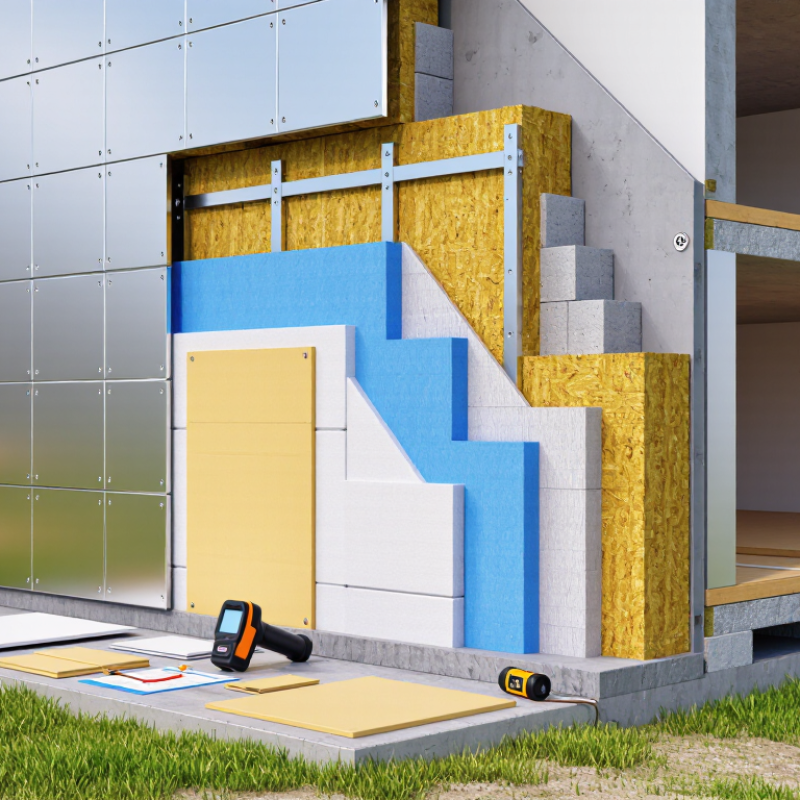
Energy-efficient walls are not defined by one product. They depend on insulation, airtightness, moisture control, and installation quality. China-made building materials can support each part when their performance is verified. Common options include mineral wool, expanded polystyrene, extruded polystyrene, insulated panels, airtight membranes, and thermal-break accessories. Each material has different fire, moisture, strength, and thermal properties.
A practical evaluation should begin with the wall’s target U-value and local building requirements. A thicker insulation layer may reduce heat loss, but poor joints can create thermal bridges. Check declared thermal conductivity, density, water absorption, fire classification, and dimensional stability.
Ask for independent laboratory reports, batch records, installation guidance, and quality-control documents. Factory audits and sample testing provide stronger evidence than attractive product photographs.
Installation details matter greatly. Seal gaps around windows, pipes, and floor edges with compatible materials. Keep insulation continuous at corners and slab connections. In wet climates, vapor control needs careful design. In cold climates, condensation risk deserves a calculation. Some projects specify materials too early and discover compatibility problems later. That mistake is common. A small site mock-up can reveal weak adhesive bonds, uneven boards, or difficult membrane joints before the full wall is built. Independent designers and inspectors should review the complete wall assembly, not just the product certificate.
Buildings consume about 30% of global final energy, according to the International Energy Agency’s Buildings 2023 report.
Wall upgrades can reduce this demand, but product selection requires more than checking thickness. China-made mineral wool, EPS, PIR boards, and aerogel blankets offer different thermal and moisture-control properties. Compare declared thermal conductivity, water absorption, density, and fire-performance test results. A lower conductivity value usually helps, but it does not guarantee a better wall assembly.
Air sealing is equally important. The U.S. Department of Energy estimates that air leakage can represent 25–40% of heating and cooling energy use in buildings. Use compatible China-made membranes, tapes, sealants, and expanding foams around window frames, service penetrations, and wall joints. Small gaps matter.
I once focused too heavily on insulation thickness and overlooked a poorly sealed sill. The final result was disappointing.
Thermal control also depends on installation. Keep insulation continuous around corners, beams, and floor edges. Select vapor-control layers according to the local climate and wall design.
Products should provide traceable laboratory reports, clear installation instructions, and compliance with recognized standards such as ISO, ASTM, or EN methods.
On-site infrared checks and blower-door testing can reveal hidden defects. These tests cost extra, but visual inspection is often unreliable.
A cheaper product may still perform well, while an expensive one may fail when moisture, compression, or careless joints are ignored.
Before installing China-made insulation boards, membranes, or reflective panels, inspect the wall as a system. Measure moisture near windows, corners, and plumbing lines. A damp substrate can trap water behind new layers and reduce performance. The U.S. Department of Energy reports that air leakage can account for 25–40% of heating and cooling energy use in typical homes. Therefore, seal cracks, service penetrations, and wall-to-floor joints before covering them.
The surface should be clean, dry, level, and strong enough for the selected fixing method. Remove loose paint and repair hollow plaster. Check wall flatness with a two-meter straightedge. Small gaps can create thermal bridges. Use compatible adhesives, anchors, tapes, and vapor-control layers. Product data sheets should state thermal conductivity, fire performance, moisture limits, and installation temperature. Independent testing under recognized standards adds credibility, especially when comparing imported materials.
My early mistake was treating insulation thickness as the main decision. It was not. The existing wall changed everything. An infrared camera can reveal cold strips, while a blower-door test can identify hidden leakage. The International Energy Agency states that buildings represent about 30% of global final energy consumption. Yet preparation is often rushed. That weakness deserves attention. Record readings, photographs, batch information, and curing times before installation. A final inspection should confirm continuous coverage, sealed edges, and safe drainage paths. Retrofit work is rarely perfect, and honest documentation makes later corrections easier.
| Wall Preparation Stage | Recommended Product Category | Key Technical Requirement | Typical Target or Reference Value | Installation Check |
|---|---|---|---|---|
| Surface inspection | Moisture meter and visual inspection tools | Identify dampness, cracking, salt deposits, mold, and loose coatings before insulation work. | The wall should be dry, structurally sound, and free from visible biological growth. | Record defects and repair them before applying insulation or air-sealing materials. |
| Crack and hole repair | Cement-based repair mortar or polymer-modified patching compound | Strong adhesion, low shrinkage, and compatibility with masonry or concrete substrates. | Repair depth and curing time should follow the product technical data sheet. | Remove loose material, clean the opening, fill in layers where required, and allow full curing. |
| Substrate cleaning | Dust remover, alkaline cleaner, or low-pressure washing equipment | The surface must be free of dust, grease, efflorescence, and release agents. | No visible residue should remain that could reduce adhesive or coating bonding. | Allow the wall to dry completely before primer, adhesive, or insulation installation. |
| Moisture control | Waterproofing coating, damp-proof membrane, or drainage improvement materials | Control bulk water before adding thermal insulation. | No active leaks or rising damp should be present at the installation area. | Check plumbing, roof edges, window joints, and external drainage before sealing the wall. |
| Primer application | Water-based masonry primer or bonding primer | Improve adhesion and equalize substrate absorption. | Apply a continuous, even coat without puddles or uncovered areas. | Use only after repairs are cured and follow the stated recoat or drying interval. |
| Air-leak sealing | Acrylic sealant, polyurethane sealant, expanding foam, or airtight membrane tape | Create a continuous air-control layer around joints, penetrations, and openings. | Seal the full perimeter of windows, doors, service penetrations, and wall-to-floor joints. | Inspect visually and, where available, verify with smoke testing or blower-door testing. |
| Thermal insulation selection | Mineral wool, expanded polystyrene, extruded polystyrene, or rigid polyurethane insulation boards | Declared thermal conductivity, dimensional stability, moisture resistance, and fire performance must suit the wall system. | Common insulation design targets are approximately R-3.5 to R-7.0 per inch, depending on material and test method. | Select thickness according to local energy codes, climate, condensation analysis, and available space. |
| Board or blanket fitting | Insulation boards, batts, mechanical fasteners, and compatible adhesive | Minimize gaps, compression, thermal bridges, and misaligned joints. | Fit insulation tightly; fill unavoidable small gaps with compatible insulation material rather than ordinary mortar. | Stagger board joints where appropriate and keep fasteners flush without damaging the insulation. |
| Thermal-bridge reduction | Insulated fasteners, thermal-break pads, perimeter insulation strips, or continuous insulation layers | Reduce heat flow through fixings, structural edges, slab lines, and junctions. | Maintain continuity of the insulation layer at corners, openings, and wall-to-roof or wall-to-floor junctions. | Review details before installation and avoid exposed metal paths where the system design does not permit them. |
| Reinforcing layer | Alkali-resistant fiberglass mesh and polymer-modified base coat | Provide impact resistance and distribute stresses across the insulation finish system. | Embed mesh continuously in the base coat with overlapping joints as specified by the system design. | Keep mesh covered, reinforce corners and openings, and avoid visible mesh after curing. |
| Exterior or interior finish | Vapor-permeable render, protective coating, or finished interior lining | Protect insulation from weather, ultraviolet exposure, impact, and uncontrolled moisture. | Use a finish compatible with the insulation, base coat, local climate, and vapor-control strategy. | Apply within the recommended temperature and humidity range and protect from rain during curing. |
| Final quality inspection | Infrared camera, surface thermometer, moisture meter, and visual inspection checklist | Confirm continuity, dryness, adhesion, and absence of obvious thermal or air-leak paths. | No visible gaps, delamination, persistent dampness, or unsealed penetrations should remain. | Inspect after curing and document repairs, material batches, installation conditions, and test results. |
Note: Actual insulation thickness, fire classification, vapor control, fastening pattern, and installation temperature must be determined from the applicable local building code and the product technical data sheet.
How to Make Walls More Energy Efficient with China Products?
Installing insulation panels, reflective coatings, and sealing materials can improve wall performance when selected as one system. The International Energy Agency reported that buildings consumed about 30% of global final energy in 2022. Poor wall insulation increases heating and cooling demand, especially during temperature extremes.
China-made insulation panels can offer practical options for exterior and interior retrofits. Choose products with declared thermal conductivity, fire classification, moisture resistance, and verified test reports. Mineral wool, phenolic foam, and expanded polystyrene serve different risk and climate conditions. The U.S. Department of Energy recommends combining insulation with air sealing, because insulation alone cannot stop uncontrolled drafts. A small gap around a panel can reduce the expected benefit.
Sealing materials should cover joints, pipe penetrations, window edges, and electrical openings. Flexible tapes and compatible sealants perform better than rigid fillers when walls move slightly. Reflective coatings may reduce solar heat gain on sun-facing walls, but their effect depends on color, exposure, surface cleanliness, and ventilation. They are not a substitute for insulation. The U.S. EPA estimates that air sealing and insulation improvements can reduce average heating and cooling costs by about 15%. Real savings vary. On one retrofit, uneven substrate preparation caused coating defects and required rework. That mistake was avoidable. Before installation, inspect moisture, measure surface temperature, and verify product certificates against local building requirements.
Typical thermal conductivity of commonly manufactured wall insulation panels. Lower values indicate better resistance to heat transfer.
PIR and XPS panels generally provide lower thermal conductivity than mineral wool and EPS at the same thickness.
Reflective coatings work mainly by reducing radiant heat transfer and require a suitable adjacent air space for measurable thermal benefit.
Airtight sealants and tapes reduce uncontrolled air leakage around joints, penetrations, windows, and doors.
Representative thermal-conductivity ranges based on commonly published values for insulation materials; actual performance depends on density, moisture, installation quality, and temperature.
Wall performance should be checked before selecting insulation or exterior wall products from China. Record indoor temperatures, monthly energy use, and surface temperatures in several rooms. A thermal camera can reveal cold corners, missing insulation, and heat escaping around sockets.
Cold spots matter.
Review the product’s declared thermal conductivity, fire rating, moisture resistance, and test reports. Compare these details with local building codes and the project’s climate. Insulated panels, mineral wool boards, and reflective coatings can improve wall performance when installed correctly. However, laboratory results may not match a poorly sealed site. Check joints, fasteners, membranes, and openings during installation.
Measure twice.
After installation, inspect the walls during both hot and cold weather. Look for cracked sealant, damp patches, loose panels, and peeling surface coatings. Pay close attention to window edges and wall-floor connections. Small gaps can quietly reduce expected energy savings. A yearly inspection is useful, while heavy rain or renovation may require an earlier check.
Keep photographs, invoices, test documents, and energy records in one file. Comparing winter heating use with previous years provides practical evidence, although occupancy and weather can distort the results. I have seen projects focus on insulation thickness while overlooking moisture control. That mistake is expensive. Energy savings also depend on ventilation, indoor habits, and maintenance quality, so wall improvements should be reviewed as part of the whole building.
Good insulation, airtight joints, moisture control, and careful installation work together. One material cannot solve every wall problem. Details matter.
Common choices include mineral wool, expanded polystyrene, extruded polystyrene, insulated panels, membranes, and thermal-break accessories. Each has different fire, moisture, strength, and thermal properties.
Check the target U-value and local building requirements. Review thermal conductivity, density, water absorption, fire classification, and dimensional stability. Product photographs are not enough.
The surface should be clean, dry, level, and structurally sound. Remove loose paint and repair hollow plaster. Measure moisture near windows, corners, and plumbing lines.
Air leakage can increase heating and cooling demand. Seal cracks, pipe openings, socket gaps, and wall-to-floor joints before covering the wall. Small gaps matter.
Keep insulation continuous around corners, windows, slab connections, and floor edges. Use compatible adhesives, anchors, tapes, and membranes. Check joints carefully.
Design vapor control for the local climate and wall assembly. In cold conditions, calculate condensation risk before installation. A damp substrate can trap water behind new layers.
Infrared imaging can reveal cold strips and missing insulation. A blower-door test can identify hidden air leakage. These tests are more useful than appearance alone.
Check for cracked sealant, damp patches, loose panels, and peeling coatings. Inspect window edges and wall-floor connections after heavy rain. Inspect yearly.
Keep energy records, indoor temperatures, photographs, invoices, and test documents together. Compare heating use across similar seasons. Weather and occupancy can distort results.
Focusing only on insulation thickness is a common mistake. Weak joints, poor moisture control, and rushed preparation can reduce performance. I made that mistake too.
A mock-up can expose uneven boards, weak adhesive bonds, and difficult membrane joints. Corrections are cheaper before full installation. It may still miss some problems.
Learning how to make walls more energy efficient starts with understanding where heat is lost and selecting suitable building materials. China-made products can provide practical options for wall insulation, air sealing, and thermal control, including insulation panels, reflective coatings, weather-resistant membranes, and joint-sealing materials. The best choice depends on the wall structure, local climate, moisture conditions, and required insulation performance. Materials should be checked for dimensions, durability, safety, and compatibility before installation.
Proper preparation is essential for reliable results. Walls should be cleaned, dried, repaired, and inspected for cracks, dampness, or uneven surfaces. During installation, insulation panels must fit closely, reflective coatings should be applied evenly, and sealing materials should cover gaps around joints, windows, doors, and service openings. Afterward, inspect the finished wall for weak points and air leakage. Regular maintenance, including checking for moisture, damaged seals, and surface deterioration, helps preserve thermal performance and maintain long-term energy savings.

RefDura Panle